
The digital landscape evolves rapidly, demanding understanding of web design’s shifting currents. For CTOs and product managers, grasping the key Web Design Trends 2026 is crucial. This article offers a direct, expert look at what truly matters for your digital presence.
AI-Powered Personalization and Adaptive Interfaces
The Rise of Predictive User Experiences
AI is no longer just a backend tool; it profoundly influences front-end design, shaping the Web Design Trends 2026. Websites now adapt in real-time to user behavior. This creates highly personalized experiences, enhancing engagement and conversion rates.
Dynamic Content Delivery
Content delivery systems leverage AI. They predict user intent and serve relevant information instantly. Consequently, this reduces cognitive load and improves navigation efficiency.
- Focus on user journey mapping. Understand common paths for AI optimization.
- Implement machine learning models for content recommendations. Tailor displays based on past interactions.
- Prioritize A/B testing for AI-driven elements. Continuously refine personalization algorithms for better results.
Immersive Experiences: From 3D to XR
Immersive web experiences are moving beyond niche applications. They are becoming mainstream. This includes advanced 3D graphics and extended reality (XR) elements, offering deeper user engagement.
WebXR and Spatial Computing
WebXR allows browser-based augmented and virtual reality. Spatial computing integrates digital content with the physical world. Therefore, designers must consider new dimensions of interaction.
Micro-interactions and Haptic Feedback
Subtle animations and haptic feedback enhance immersion. They provide tactile responses to user actions. Moreover, this adds a layer of realism and satisfaction.
Sustainable Web Design & Performance Optimization
Environmental impact is a growing concern. Web design is no exception. Sustainable web design prioritizes efficiency and minimal resource consumption, benefiting both the planet and user experience.
Energy-Efficient Aesthetics
Design choices directly impact energy usage. Dark modes, optimized imagery, and efficient code reduce server load. Consequently, this leads to lower carbon footprints.
Core Web Vitals as a Design Principle
Google’s Core Web Vitals remain critical. They are fundamental for SEO and user satisfaction. Designers must integrate performance considerations from conception, ensuring optimal user experience.
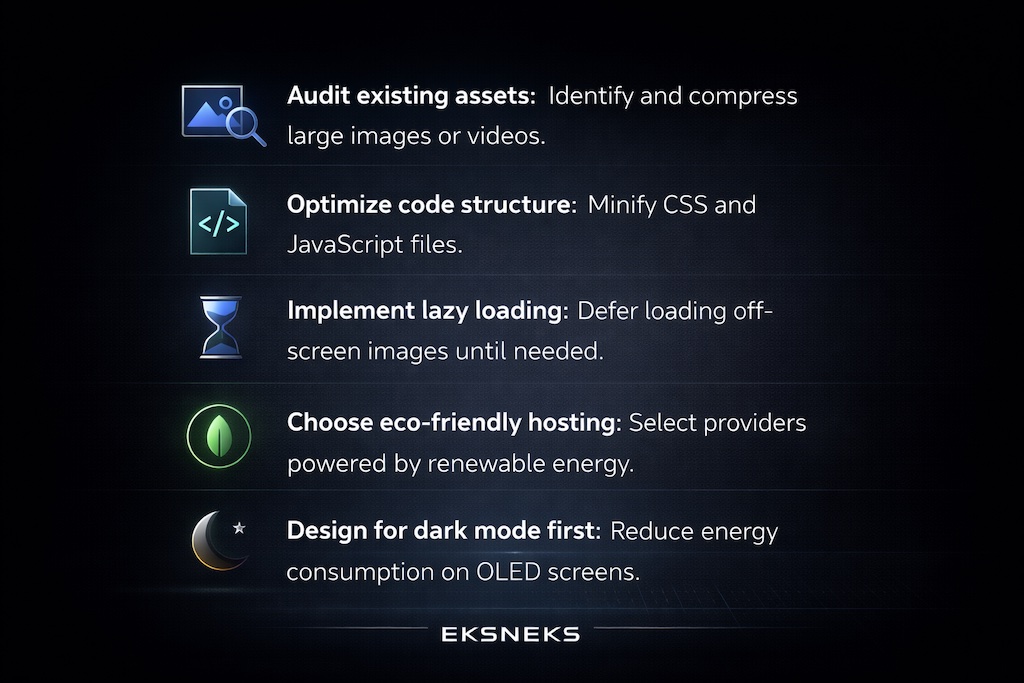
- Audit existing assets: Identify and compress large images or videos.
- Optimize code structure: Minify CSS and JavaScript files.
- Implement lazy loading: Defer loading off-screen images until needed.
- Choose eco-friendly hosting: Select providers powered by renewable energy.
- Design for dark mode first: Reduce energy consumption on OLED screens.
Hyper-Accessibility and Inclusive Design
Accessibility is no longer an afterthought. It is a foundational principle. Inclusive design ensures everyone can access and interact with web content, expanding audience reach.
Beyond WCAG Compliance
While WCAG guidelines are essential, inclusive design goes further. It considers diverse cognitive abilities, cultural backgrounds, and device types. Empathy drives better design solutions for all users.
Personalizable Interfaces
Allowing users to customize their experience is key. Options for font size, color contrast, and navigation preferences empower individuals. Furthermore, this builds a more user-centric and flexible web.
The Maturation of No-Code/Low-Code Platforms
No-code and low-code platforms have revolutionized development. They empower non-developers to build sophisticated web applications. This accelerates prototyping and deployment cycles, with capabilities expanding rapidly.
Bridging Design and Development
These platforms blur the lines between design and development. Designers can implement ideas directly. Developers can focus on complex integrations, fostering greater collaboration and efficiency.
Strategic Integration Considerations
Choosing the right platform is critical. Evaluate scalability, customization options, and integration capabilities. Strategic use of no-code/low-code can significantly reduce time-to-market and allow rapid iteration. Comparing Approaches for Adopting New Web Design Trends
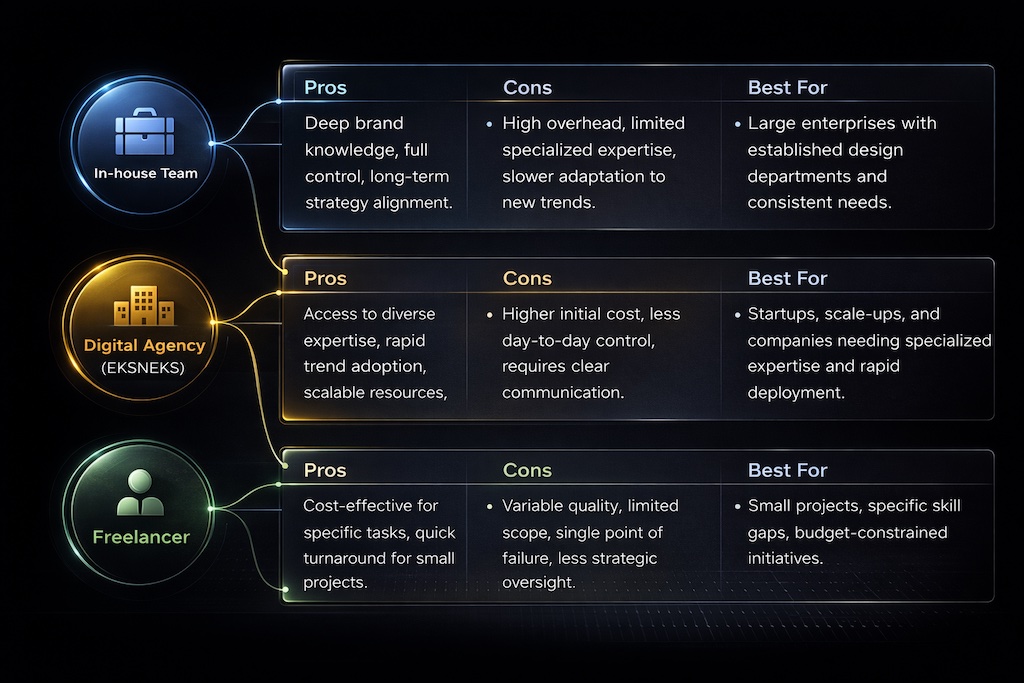
| Approach | Pros | Cons | Best For |
|---|---|---|---|
| In-house Team | Deep brand knowledge, full control, long-term strategy alignment. | High overhead, limited specialized expertise, slower adaptation to new trends. | Large enterprises with established design departments and consistent needs. |
| Digital Agency (EKSNEKS) | Access to diverse expertise, rapid trend adoption, scalable resources, strategic insights. | Higher initial cost, less day-to-day control, requires clear communication. | Startups, scale-ups, and companies needing specialized expertise and rapid deployment. |
| Freelancer | Cost-effective for specific tasks, quick turnaround for small projects. | Variable quality, limited scope, single point of failure, less strategic oversight. | Small projects, specific skill gaps, budget-constrained initiatives. |
Key Takeaways
- AI-driven personalization is paramount for engaging users.
- Immersive experiences (3D, XR) offer unique brand differentiation.
- Sustainable design practices are essential for ethical and performant websites.
- Hyper-accessibility ensures a broader, more inclusive user base.
- No-code/low-code platforms accelerate design implementation and iteration.
The future of the web in 2026 demands adaptability and foresight. Embracing these core Web Design Trends 2026 is a strategic imperative for CTOs and product leaders, necessitating investment in intelligent, immersive, and inclusive digital experiences. EKSNEKS specializes in crafting cutting-edge web solutions that drive real business value; contact us today to future-proof your digital presence.
FAQ
How will AI truly impact web design by 2026?
AI will move beyond basic chatbots, enabling highly adaptive interfaces that personalize content, layouts, and interactions in real-time. This creates unique user journeys based on individual behavior and preferences.
Is 3D and XR just a gimmick for web design?
No. While early implementations varied, by 2026, 3D and XR will be integrated more meaningfully. They offer genuine immersive experiences for product showcases, interactive storytelling, and virtual environments, enhancing engagement.
What’s the most critical aspect of sustainable web design?
The most critical aspect is performance optimization. Efficient code, optimized media, and green hosting reduce energy consumption. This not only lowers environmental impact but also improves user experience and SEO rankings.
How can my team begin implementing hyper-accessibility?
Start by integrating WCAG 2.2 guidelines into your design process from the outset. Conduct regular accessibility audits. Crucially, involve users with diverse needs in your testing phases to gain authentic insights.
Are no-code/low-code platforms suitable for complex enterprise websites?
Yes, increasingly so. While traditional development remains vital for highly custom or integrated systems, modern no-code/low-code platforms are robust enough for many enterprise-level applications, especially for rapid prototyping and specific functionalities.